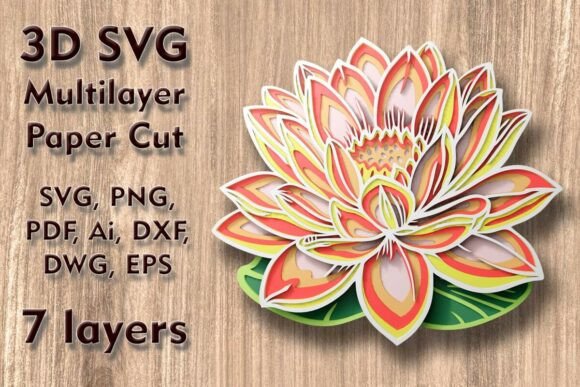
Lotus 3D SVG Multilayer PaperCut Files
A Designer’s First Glance: Grace, Depth, and Quiet Confidence
Opening Lotus 3D SVG Multilayer PaperСut Files feels like unfolding a delicate botanical sketch—immediately calming, yet unmistakably intentional. The layered lotus isn’t just a flat silhouette; it breathes with dimension through staggered petals, subtle overlaps, and fine interior cutlines that suggest shadow and volume. At 250 W × 220 H mm (9.85 × 8.7 in), it lands squarely in the “statement but not overwhelming” sweet spot—ideal for a custom embroidered tote bag I recently prepped for a local boutique’s spring launch. It wasn’t meant to shout. It was meant to invite closer looking—and that’s exactly what it does.
Where This Design Naturally Lives in Real Embroidery Projects
I tested Lotus 3D SVG Multilayer PaperСut Files across three real product types: a linen tea towel for a wedding favor set, a cotton baby onesie (size 0–3 months), and a structured canvas apron for a ceramicist’s studio shop. On the towel, the design translated beautifully into soft satin stitch petals with gentle fill-stitch centers—clean, elegant, and instantly recognizable as handmade. On the onesie, I scaled it down to ~120 mm wide and used lightweight tear-away stabilizer; the outer petal edges stayed crisp, though I skipped the finest interior lines to avoid thread nesting on such thin fabric. The apron handled the full size effortlessly—its sturdy weave supported dense stitching without puckering, and the layered effect read clearly even from across the room.
This design shines brightest where craftsmanship is part of the story: nursery decor, boutique kitchen textiles, personalized gifts for plant lovers or wellness practitioners, and small-batch apparel with quiet sophistication. It’s not built for loud streetwear or high-contrast logos—but for Etsy sellers offering heirloom-quality baby embroidery or craft fair vendors curating mindful, tactile goods, it adds instant visual weight and emotional resonance.
What Demands Extra Attention—Before You Stitch
The “multilayer” strength of Lotus 3D SVG Multilayer PaperСut Files also means attention is non-negotiable in certain contexts. Thin elements—especially the innermost stamen lines and petal tips—lose definition below ~100 mm. I wouldn’t recommend reducing further unless you’re willing to simplify manually. On stretchy fabrics like jersey or ribbed knit (think sweatshirt cuffs or toddler tees), those fine layers need extra stabilization—cutaway plus topping works best. And on dark fabric? Test thread color contrast early: pale gold or ecru satin stitch reads softly but warmly against navy or charcoal, while white can flatten the depth if not balanced with strategic underlay.
Curved surfaces—like caps or curved pillow covers—require careful hooping and possibly repositioning mid-stitch to keep petal alignment true. Dense stitch areas (especially where layers overlap near the center) benefit from reduced stitch density in your editing software—if your machine allows—just enough to prevent stiffness without sacrificing shape. And never skip checking how it renders in black-and-white mockups: this design relies on tonal gradation, not sharp outlines, so grayscale previews reveal clarity gaps faster than color ones.
How It Elevates the Finished Product—Beyond Aesthetics
Customers don’t just buy a lotus. They buy intention. When I added Lotus 3D SVG Multilayer PaperСut Files to a limited-run batch of organic-cotton pillow covers, buyers mentioned “calm,” “thoughtful detail,” and “feels like it was made just for me”—even though it’s a digital embroidery file. That’s the power of layered, botanical storytelling in stitch. It boosts perceived value without increasing material cost. For craft businesses, it reinforces brand consistency: serene, nature-rooted, quietly refined. For Etsy sellers, it improves engagement—photos of the layered petals catch scrolling eyes, and customers ask about the “3D effect” before they even notice the shop name.
It also strengthens trust. Because the design avoids over-complication—no micro-lettering, no fragile filigree—it stitches reliably across mid-tier home machines. That reliability matters when fulfilling personalized gifts or holiday embroidery orders on tight timelines. And because it reads well at multiple sizes and on varied substrates (linen, cotton, canvas, even medium-weight denim), it becomes a versatile anchor in your design assets—not a one-off novelty.
Practical Notes Every Embroidery Designer Should Keep Handy
- Always test first—on scrap fabric matching your final project’s weight, texture, and stretch.
- Review stitch density before loading: dense fills may need slight reduction for breathable fabrics like baby onesies or summer totes.
- Confirm hoop size compatibility: the full-size design fits comfortably in a 10×12" hoop, but check your machine’s max area before scaling up.
- Inspect small details at actual stitch size—zoom in on your embroidery software preview to verify petal tips and inner cutlines won’t vanish.
- Use proper stabilizer: lightweight cutaway for knits, tear-away for stable wovens, and topping for napped or textured fabrics like terry cloth towels.
- Check licensing before selling finished items or bundling Lotus 3D SVG Multilayer PaperСut Files into digital product kits—commercial use rights vary by seller.
- Compare light/dark backgrounds in mockups—this design gains warmth on cream or oat but retains elegance on deep indigo or forest green.
Final Thought: A Design That Works With You, Not Just For You
Lotus 3D SVG Multilayer PaperСut Files doesn’t demand attention—it earns it. As a designer who evaluates hundreds of embroidery files yearly, I appreciate how little it asks for in return: no excessive editing, no constant troubleshooting, no compromise between beauty and buildability. It belongs in your folder of go-to designs for paper flowers, botanical embroidery projects, and any handmade product where subtlety speaks louder than saturation. Whether you’re stitching a single personalized gift or building a cohesive line for your small shop, this lotus doesn’t just sit on fabric—it settles in, thoughtfully, and stays remembered.