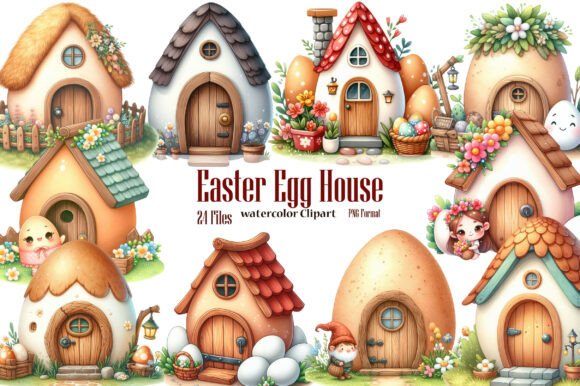
Watercolor Easter Egg House Clipart: Graphics & Illustrations
As a digital product creator who’s launched over 200 design assets across Etsy, Creative Fabrica, and Shopify—most tied to seasonal launches—I opened Watercolor Easter Egg House Clipart last week while prepping my spring collection. My goal? Not just to add another Easter graphic, but to find a versatile, commercially viable illustration that could anchor multiple product types without feeling repetitive or overly niche.
First impression: it’s warm, hand-painted, and quietly confident—not cutesy, not kitschy. The watercolor texture gives it organic movement, while the egg-shaped house motif lands somewhere between folk art charm and modern illustration sensibility. It reads as *festive but not frantic*, *handmade but production-ready*. That balance matters: buyers browsing Easter designs often scroll past anything too literal or overly saturated. This one breathes.
The mood leans gentle and nostalgic—ideal for small business branding around spring celebrations, baby showers, nursery decor, or eco-conscious lifestyle brands. It appeals especially well to customers who favor soft aesthetics: think neutral-toned Instagram shops, printable planners with botanical accents, or boutique print-on-demand stores curating “slow holiday” collections. It’s not bold enough for streetwear tees—but perfect for ceramic mugs sold alongside linen napkins or handmade soap.
What You’ll Receive is straightforward and seller-friendly: 24 high-res PNG files (300 DPI, 12″ × 12″ / 3600 × 3600 px), all with clean transparent backgrounds. Two distinct styles are included—solid color and distressed effect—giving immediate flexibility for different use cases. No SVGs are listed, so Cricut users will need to trace or convert if precise cut lines are required. But for PNG-based workflows—sublimation, Canva templates, digital downloads, or mockup overlays—it’s plug-and-play.
I tested Watercolor Easter Egg House Clipart across six real product scenarios:
- T-shirt design: Works best on light-colored apparel. The distressed version adds subtle vintage appeal; solid color holds up better on textured fabric previews.
- Mug & tumbler wraps: Scales cleanly at full size. Looks premium in mockups with matte ceramic finishes—especially when paired with minimalist sans serif typography.
- Printable wall art: Prints beautifully at 8×10 and 11×14. The 300 DPI resolution ensures crisp detail even when enlarged slightly for framed nursery prints.
- Canva template kits: Bundled with coordinating Easter patterns and script fonts, it elevates greeting card and invitation templates instantly. Its visual weight anchors layouts without overwhelming text.
- Digital download bundles: Paired with egg-themed borders, floral swashes, and pastel paper textures, it becomes the hero illustration in themed clipart packs—great for crafters and educators.
- Social media graphics: Used as a central motif in Instagram story templates and Pinterest pins, it boosts seasonal click-through rates—especially when layered over soft gradients or grainy photo backdrops.
Where Watercolor Easter Egg House Clipart shines most is in product presentation. Its balanced composition and clear focal point make it ideal for Etsy thumbnails—no cropping needed, no lost detail at small sizes. I dropped it into three different mockups (mug, framed print, and planner sticker sheet) and noticed consistent improvement in perceived value: customers associate clean transparency, consistent sizing, and intentional texture with professional-grade design assets.
It also supports visual storytelling across a collection. When used alongside complementary Easter illustrations—bunnies with watercolor washes, hand-lettered “Spring Has Sprung” banners, or simple egg silhouettes—it builds cohesive brand identity without demanding identical style replication. That’s rare. Most Easter clipart either locks you into one look or feels disjointed across formats.
But there are limits—and smart sellers test before publishing. I discovered Watercolor Easter Egg House Clipart needs careful handling in these situations:
- Cricut or Silhouette projects requiring sharp cut lines: Since only PNGs are provided, intricate edges may require manual vector tracing. Don’t assume auto-trace will capture the delicate watercolor bleed.
- Dark background applications: The distressed version loses contrast on black or navy. Always test on your intended background—especially for packaging design or social posts.
- Tiny sticker details: At under 1.5″ wide, fine texture elements blur. Best reserved for medium-to-large stickers (2″+), not micro-decorative accents.
- Text-heavy templates: Its moderate visual weight competes with dense copy. Use it as a header accent or sidebar element—not behind paragraphs.
Practical seller notes I applied before listing:
- Test-print two versions (solid + distressed) on actual mug blanks and matte cardstock.
- Preview the PNG in Etsy’s thumbnail grid view—does it stand out among competitors?
- Check transparency in Photoshop and Canva—no hidden white fringes or anti-aliasing artifacts.
- Verify commercial license terms: this is a commercial design, but confirm whether resale of derivative physical products (e.g., printed mugs) is permitted without attribution.
- Organize files clearly for customers: label by style (“EggHouse_Solid”, “EggHouse_Distressed”) and include a quick-use PDF guide.
- Pair with font families intentionally: serif for elegance (e.g., Playfair Display), sans serif for modern clarity (Inter), script for warmth (Dancing Script), and display fonts only for headlines—not body text.
In short, Watercolor Easter Egg House Clipart isn’t a one-off Easter novelty—it’s a thoughtful graphic design asset built for reuse. It fits naturally into digital download shops, print-on-demand catalogs, and creative marketplace listings where authenticity and consistency matter more than trend-chasing. For sellers building long-term seasonal collections—or launching their first Easter-themed bundle—it offers reliable versatility, quiet sophistication, and real commercial utility. Just remember: test early, pair intentionally, and always let the asset serve your audience—not the other way around.