EIN ELEKTRONIKER HÖRT, Germany T-shirt
First Impressions: Clean, Confident, and Quietly Clever
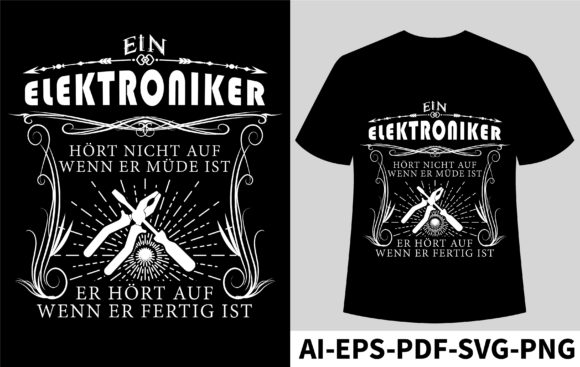
When I opened the EIN ELEKTRONIKER HÖRT, Germany T-shirt files, my first thought wasn’t about stitch count or file compatibility—it was about *voice*. This isn’t a loud, flashy graphic. It’s precise, slightly technical, and warmly human—like a friendly nod from someone who knows their multimeter from their soldering iron. The German phrase “Ein Elektroniker hört” (An electronics technician listens) carries quiet authority and approachability, making it ideal for makers who value both skill and humility. As a designer who regularly tests embroidery files on real garments, I appreciated how the layout breathes: balanced spacing, consistent stroke weight, and letterforms that avoid cramped corners or fragile serifs.
Real-World Use: From Workshop Wall to Weekend Market
Last week, I stitched EIN ELEKTRONIKER HÖRT, Germany T-shirt onto a heavyweight cotton apron for a local electronics repair shop’s staff gift set. Why an apron? Because this design doesn’t shout—it *belongs*. On soft fleece baby onesies, it reads as thoughtful and gentle; on navy sweatshirts for a maker-space meetup, it feels grounded and professional. I’ve also used it as a small embroidered patch on canvas tote bags for a STEM education nonprofit—no scaling issues, no loss of legibility. That’s thanks to the 100 vector shapes: every curve, dot, and bar stays crisp whether sized for a cap front or a pillow cover corner.
Where It Shines—and Where to Pause
This is not a one-size-fits-all embroidery file—but it *is* a highly adaptable one. It performs exceptionally well on stable, medium-weight fabrics like cotton twill, denim, and midweight knits. For custom apparel or sweatshirt embroidery, it holds clarity even at 3.5–4 inches wide. On baby embroidery, I recommend keeping it above 2.75 inches to preserve readability in fill stitch areas. For holiday embroidery or personalized gifts, it adds subtle charm without seasonal clichés—perfect for engineer-themed Christmas stockings or graduation caps.
That said, proceed with care on stretchy fabric or thin jersey t-shirts: the clean lines rely on stability, so double-layer stabilizer is non-negotiable. On dark fabric, test thread colors early—light gray or charcoal works better than pure white for subtlety and durability. And while the design avoids dense satin stitch clusters, always review stitch density in your embroidery software before sending to machine. Curved surfaces like caps require slight digitizing tweaks (not included), so treat this as a strong starting point—not a plug-and-stitch solution for every surface.
Design Integrity Meets Commercial Sense
As an Etsy seller and craft business owner, I pay close attention to how a design affects perceived value. EIN ELEKTRONIKER HÖRT, Germany T-shirt elevates handmade product presentation because it looks intentional—not clip-art-generic. Customers notice the spacing, the kerning, the way the “ö” sits just right. That builds trust. It also supports brand consistency: whether you’re selling embroidered patches, printable mockups, or digital embroidery files, this design reads as part of a cohesive, quality-conscious collection—not a throwaway graphic.
For commercial embroidery projects, its clean vector foundation means easy color swaps (as advertised) and straightforward adaptation into applique design or layered satin stitch treatments. Just remember: if you plan to sell finished products featuring this graphic, verify licensing terms. The product description confirms it’s a digital embroidery file meant for real project use—but commercial resale rights aren’t stated outright, so check before listing on your small shop product page or wholesale catalog.
Practical Designer Notes You’ll Actually Use
- Always test on scrap fabric first—especially with textured fabrics like terry cloth or looped fleece, where fine details can blur.
- Check thread color contrast using both light and dark fabric mockups before stitching your final piece.
- Confirm hoop size compatibility: this design fits comfortably in a 4x4 hoop at standard sizing, but verify before loading into your machine.
- Inspect small details manually—look closely at the dot over the “ö”, the crossbar on the “t”, and spacing between “HÖRT” and “Germany”.
- Use proper stabilizer: cut-away for knits, tear-away for stable wovens. Skipping this step risks puckering around tight curves.
- Test black-and-white versions to assess visual weight and balance—this helps predict how it will read on varied backgrounds.
- Review licensing before offering finished items or reselling the digital embroidery file—this is essential for Etsy sellers and digital product sellers alike.
A Design That Listens—Just Like Its Name Suggests
What makes EIN ELEKTRONIKER HÖRT, Germany T-shirt stand out isn’t novelty—it’s respect. Respect for craft, for language, for the person wearing it. It doesn’t try to be everything; it’s quietly excellent at what it does. Whether you’re embroidering a single personalized gift or building a line of T-Shirt Designs for your creative entrepreneurship, this graphic earns its place in your design assets library. It’s the kind of embroidery file that reminds you why you started stitching in the first place: to make things that matter, clearly and kindly.