Construction Truck Excavator Clipart PNG
A Watercolor Excavator That Feels Like a Real Design Choice—Not Just Another Clipart
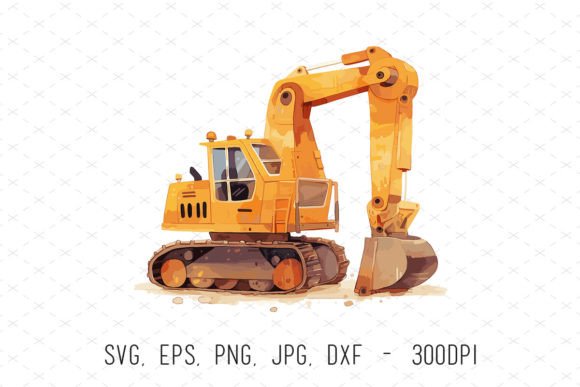
As someone who’s stitched excavators onto baby onesies, embroidered them onto denim aprons for construction-themed cafés, and tested dozens of “truck” graphics for Etsy shop bundles, I opened Construction Truck Excavator Clipart PNG expecting charm—but not the quiet confidence it delivers. It’s watercolor-styled, yes, but not overly soft or blurred. There’s weight to the silhouette, intention in the angle of the boom arm, and just enough mechanical detail (a visible bucket tooth, subtle cab window reflection) to read as authentic—not cartoonish—without demanding fine-digitization.
What This Clipart Actually Wants to Be Stitched On
I sketched out a real project while reviewing: a medium-weight cotton canvas tote bag for a local contractor’s kid’s birthday gift. The Construction Truck Excavator Clipart PNG landed perfectly at 4.5" wide—large enough to read clearly on fabric, small enough to avoid overwhelming the bag’s front panel. Its horizontal orientation and grounded stance make it ideal for sweatshirt chest placements, tea towel hems, or pillow cover corners. It doesn’t beg for center-stage like a logo; instead, it feels like a thoughtful accent—friendly, professional, and quietly proud.
This isn’t a design that fights its way into your product. It supports it. That matters when you’re building trust with customers who buy handmade products because they value intention—not just cuteness.
Where It Shines in Real Embroidery Projects
- Custom apparel: Works cleanly on midweight cotton tees and fleece-lined sweatshirts—no jagged edges or thin lines that vanish in fill stitch.
- Baby embroidery: Soft watercolor edges translate well to gentle satin stitch outlines, especially on knit onesies (with light cutaway stabilizer).
- Embroidered patches: Its clean outer contour and moderate internal detail hold up well when turned into sew-on or iron-on patches.
- Holiday or milestone gifts: Paired with a simple “Future Builder” or “Digger in Training” text block, it elevates a kitchen towel or blanket from generic to meaningful.
- Craft business assets: As part of a coordinated set (e.g., bulldozer + crane + excavator), it strengthens brand consistency across listings, mockups, and packaging.
Where You’ll Want to Pause—and Test First
The watercolor texture is lovely on screen—but in stitch, subtlety can become ambiguity. Here’s where practical judgment kicks in:
- Small hoop sizes (under 4"): Scale down only if you’re willing to simplify details manually—those tiny bucket grooves won’t digitize cleanly below 3".
- Textured or stretchy fabrics: Linen nap or jersey knit may soften the outline. Use a medium tear-away + light cutaway combo, and consider reinforcing the boom arm with a running stitch underline.
- Dark fabric backgrounds: The watercolor wash reads beautifully on cream or heather grey, but test thread contrast carefully on navy or black—lighter thread colors may need an underlay to prevent shadowing.
- Curved surfaces (caps, hats): Avoid placing the full excavator across the crown seam. Instead, position it fully on the front panel, keeping the bucket and cab within the flat embroidery zone.
- Frequent-wash items (baby clothes, towels): Confirm stitch density isn’t too low—sparse fill areas can snag. A balanced digitization (not too dense, not too airy) will serve longevity better than maximum coverage.
How It Shapes Perception—Before and After Stitching
Customers don’t buy clipart—they buy feeling. When someone sees this Construction Truck Excavator Clipart PNG stitched on a boutique apron, they register competence, care, and thematic cohesion—not “someone slapped a truck on there.” That impression lifts perceived value, especially for personalized gifts and small shop products.
It also signals professionalism to fellow makers. If you’re bundling digital embroidery files for Etsy, including this as a standalone machine embroidery design—or pairing it with coordinating digger-themed applique designs—tells buyers you understand scale, context, and commercial viability. It doesn’t look like a stock graphic dropped into a template. It looks like it was chosen.
Practical Designer Notes Before You Stitch
- Always test on scrap fabric first—especially with your actual stabilizer and thread combo. Watercolor edges behave differently in satin vs. fill stitch.
- Review stitch density in your embroidery software. If the original file lacks digitization notes, assume it’s a graphic—not a ready-to-stitch embroidery file—and plan time for digitizing or hiring a digitizer.
- Check licensing before selling finished items. Since this is listed as Illustrations / Graphics (not pre-digitized embroidery files), confirm whether commercial use covers physical products, digital resale, or both.
- Compare black-and-white mockups on light and dark backgrounds—you’ll spot contrast issues faster than on screen.
- Inspect small details at 200% zoom in your design software. Does the bucket edge stay crisp? Does the cab window disappear into fill? Adjust before hooping.
- Use proper stabilizer for your fabric type—watercolor softness shouldn’t translate to wobbly stitching.
Final Thought: A Design That Earns Its Place
Construction Truck Excavator Clipart PNG isn’t flashy—but it’s reliable. It’s the kind of illustration that disappears into your product just enough to feel intentional, not imposed. Whether you’re creating a custom embroidered patch for a preschool fundraiser, designing a printable mockup for your Etsy shop, or building a cohesive line of construction-themed craft business assets, this graphic holds its ground without shouting.
That’s rare. And honestly? That’s why I’ll be using it—not once, but across multiple projects, knowing it’ll support the story I’m stitching, not distract from it.